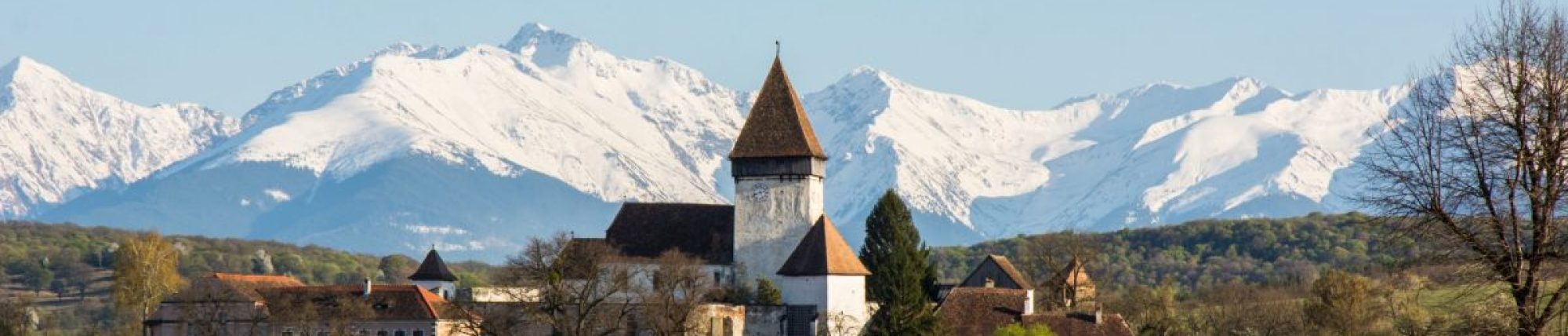

Glockenturm
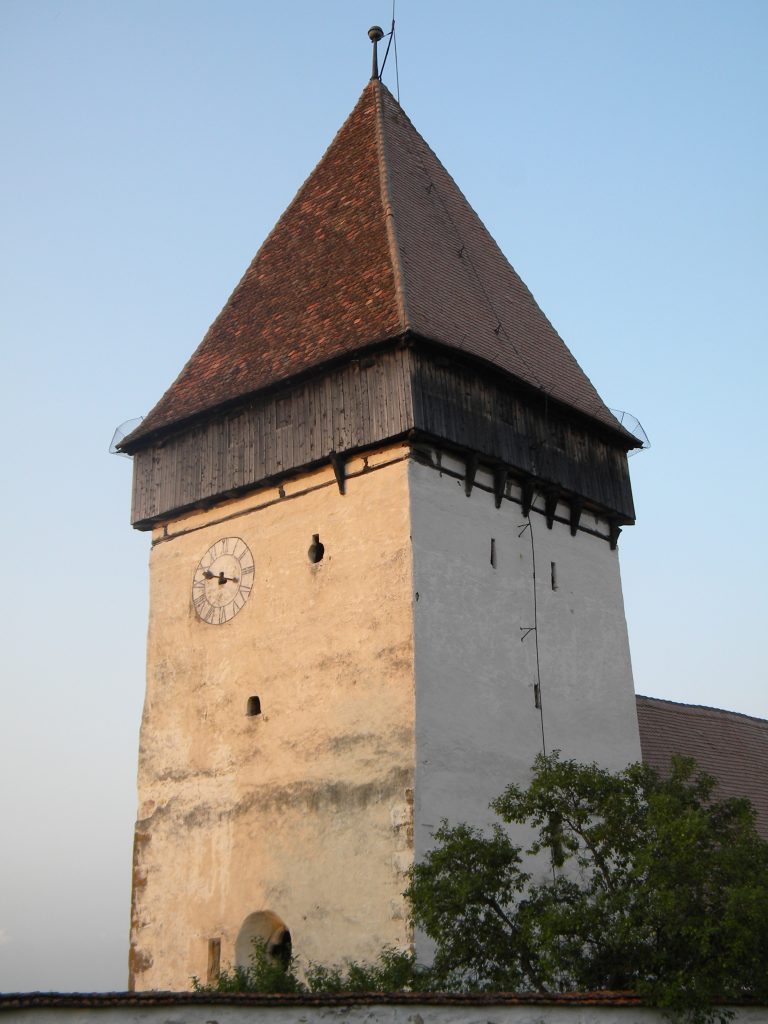
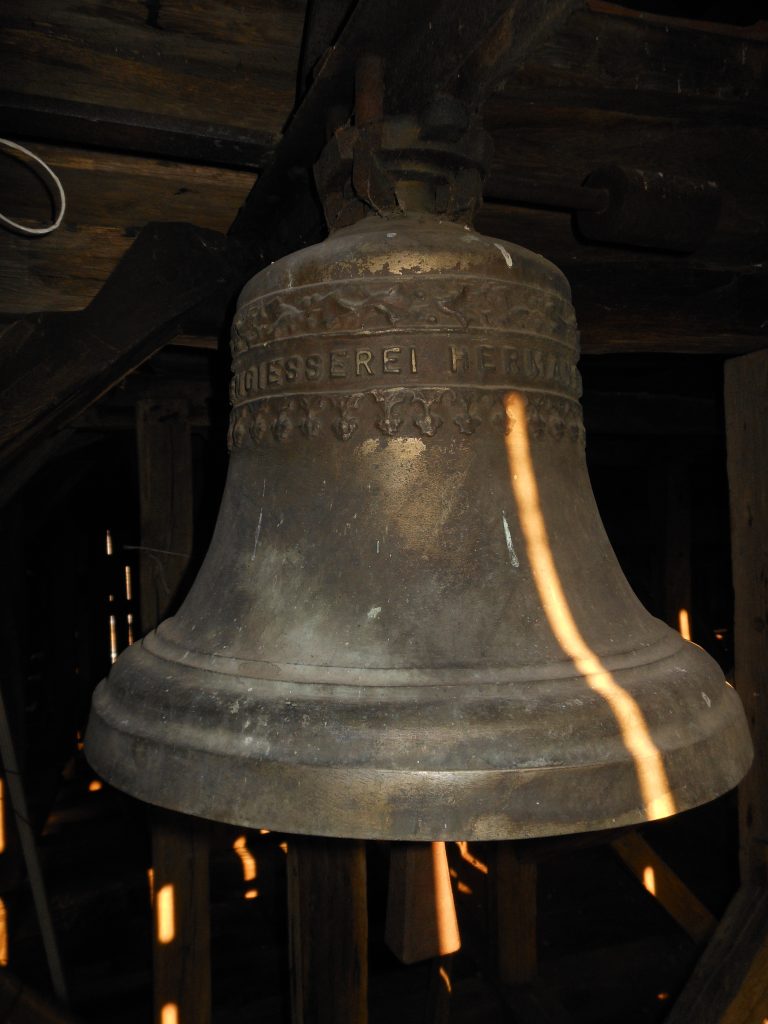
Der Glockenturm gehörte bereits zum romanischen Ursprungsbau und wurde im Zuge der Wehrbarmachung der Kirche im 15. und 16. Jh. umgebaut. Er wurde erhöht, erhielt einen holzverschalten Wehrgang und wurde mit Schießscharten ausgestattet. Der Glockenturm beherbergt zwei Glocken, eine größere, die 1911 in Schäßburg, und
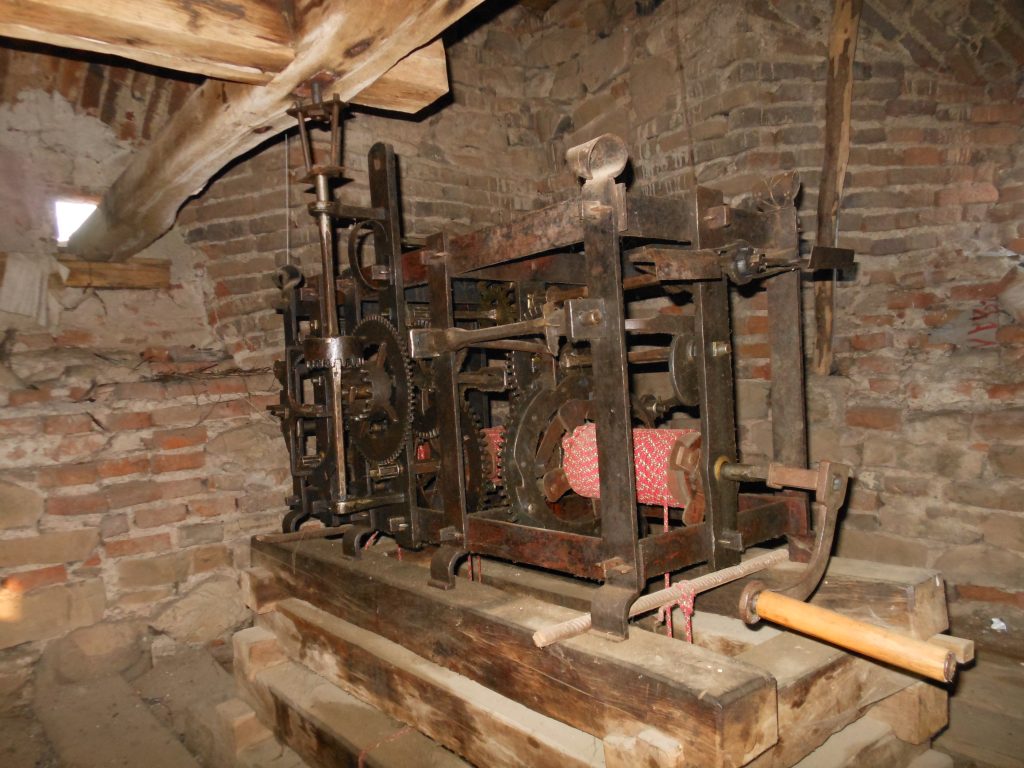
eine kleinere, die 1930 in Hermannstadt gegossen wurde. Im Turm befindet sich eine historische Uhr, mit Zifferblättern auf der Nord- und Südseite. Der jeweils einzige Zeiger, der Stundenzeiger, hat die Form einer Hand. Der Mechanismus der Uhr ist auch heute noch funktionstüchtig. Auf der Westseite über dem Portal ist ein Flachrelief eingelassen. Bei dieser Darstellung könnte es sich um die Taufe Jesu handeln, eine andere Interpretation sieht darin Adam und Eva.
RO – TURNUL PRINCIPAL
Turnul clopotniță făcea deja parte din clădirea romanică originală și a fost modificat în timpul fortificării bisericii în secolele XV și XVI. A fost înălțat, a primit un drum de strajă din lemn și a fost dotat cu creneluri. Turnul adăpostește două clopote, unul mai mare turnat în 1911 la Sighișoara și unul mai mic turnat în 1930 la Sibiu. În turn este adăpostit un ceas, cu cadrane pe laturile de nord și de sud. Acestea sunt pictate pe zid, pe fiecare dintre ele, singurul arătător, cel care arată ora, are forma unei mâini. Mecanismul ceasului este încă în stare de funcționare. Pe latura de vest, deasupra portalului, se află un basorelief. Acesta înfățișează două persoane, una îmbrăcată și una nudă, îngenuncheată. Acesta ar putea reprezenta fie botezul lui Iisus, fie pe Adam și Eva.
EN – BELL TOWER
The bell tower already belonged to the original Romanesque building and was modifyt in the course of the fortification of the church in the 15th and 16th centuries. It was raised, equipped with a wooden walkway and embrasures. The bell tower houses two bells, a larger one, cast in 1911 in Sighisoara, and a smaller one, cast in 1930 in Sibiu. A clock is housed in the tower, with dials on the north and south sides. These are painted on, the only hand in each case, the hour hand has the shape of a human hand. The mechanism of the clock is still functional. On the west side above the portal there is a bas-relief. It depicts two persons, a clothed and an unclothed kneeling person. This representation could be the baptism of Jesus, others want to see Adam and Eve in it.
HU – HARANGTORONY
A harangtorony már az eredeti román kori épület része volt, és a templom 15-16. századi megerősítése során építették át. Megmagasították, fából készült harangtornyot kapott, és boltozatokkal látták el. A harangtoronyban két harang található, egy nagyobbat 1911-ben Sepsiszentgyörgyön, egy kisebbet pedig 1930-ban Nagyszebenben öntöttek. A toronyban egy óra található, az északi és a déli oldalon számlapokkal. Ezek fel vannak festve, az egyetlen mutató minden esetben az óra mutatója. Az óra mechanizmusa még mindig működőképes. A nyugati
oldalon a portál felett egy bazaltrelief található. Ez két embert ábrázol, egy felöltözöttet és egy ruhátlanul térdelőt. Ez az ábrázolás lehet Jézus megkeresztelése, mások Ádámot és Évát akarják benne látni.